
Introduction
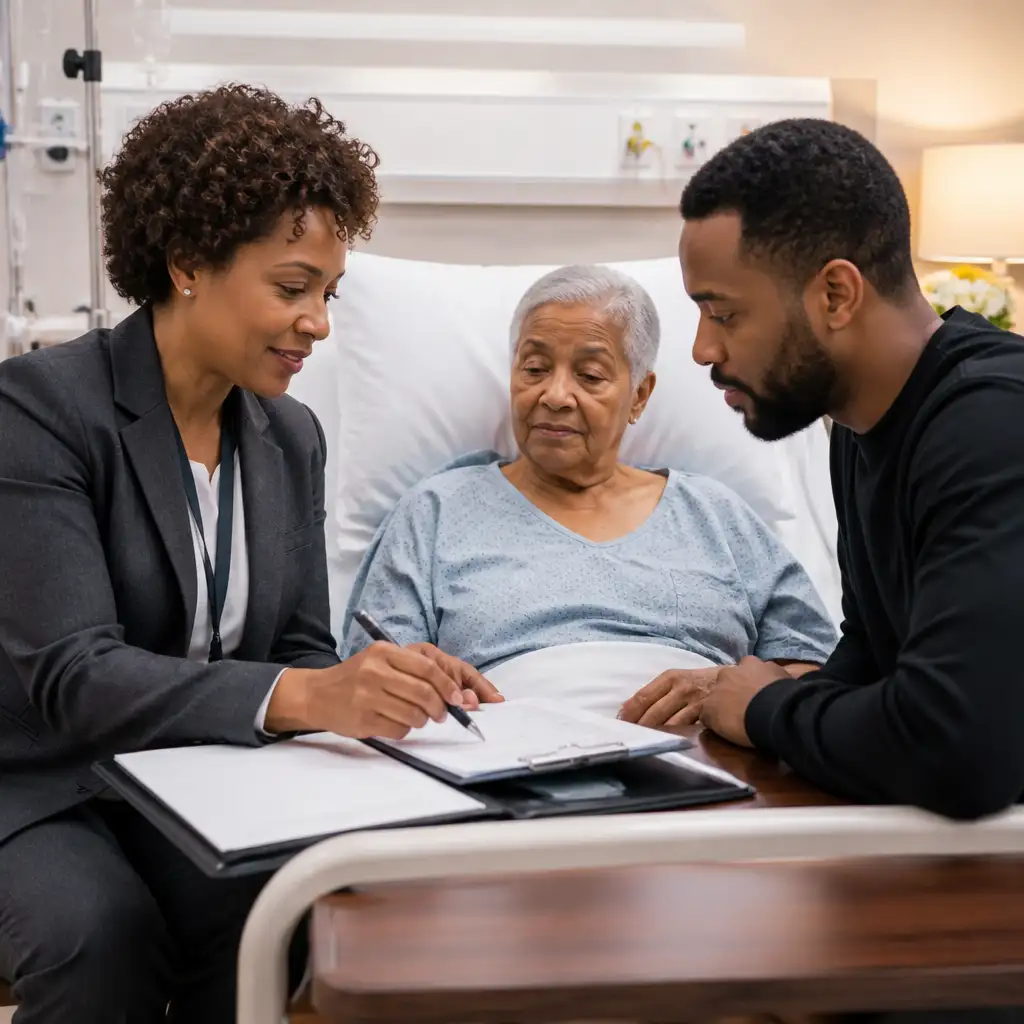
When a parent or loved one is admitted to the hospital, family members often face urgent paperwork decisions. Advance directives and powers of attorney (POA) are common examples of documents that may need to be signed and notarized quickly so medical teams and caregivers can follow the patient’s wishes.
Notarization matters because hospitals, insurance providers, and other institutions frequently require a properly executed notarial acknowledgment to accept advance directives, health care proxies, or durable powers of attorney. When time is short and mobility is limited, traveling to a notary public office can be impractical or impossible.
That’s where a mobile notary can make a real difference. A qualified mobile notary can travel to the hospital, meet family members at the bedside or in a family conference room, verify IDs, and notarize documents the same day—reducing stress and keeping care decisions on schedule. If you need speedy help, learn how to prepare, what hospitals typically require, and how to coordinate a compassionate bedside notarization.
Why advance directives and powers of attorney often require notarization
Hospitals and other institutions usually require notarized signatures on advance directives and many POA documents to confirm that the signer is who they say they are and that they signed voluntarily. A notary public verifies identity, checks for willingness and capacity to sign, and provides an official certificate that the document was notarized. This helps hospitals accept documents without delay and reduces the chance of later disputes about authenticity.
Notarization does not make a document legally valid by itself, nor does a notary provide legal advice. Rather, notarization supports the administrative and evidentiary needs of hospitals and other agencies that handle sensitive healthcare decisions. If you have questions about which form is appropriate, consult an attorney—then use a professional mobile notary to handle the signing and verification.
If you’re unsure about available services in your area, Get Nimble Notary offers reliable mobile notary services across the SouthCoast to help families complete these important steps at the bedside.
When a mobile notary is the best option during a hospital stay
A mobile notary is particularly helpful when:
- The patient cannot travel or leaving the facility would interrupt care.
- Family members are arriving from out of town and need a same-day solution.
- Hospital staff require notarized advance directives before accepting them into the medical record.
- There is limited time to finalize POA forms before a procedure or discharge.
Choosing a mobile notary reduces the logistical burden on caregivers and helps keep decision-making on the hospital’s timeline. Mobile notaries experienced with hospital visits understand privacy, identification protocols, and how to work respectfully with staff and family members.
How same-day and bedside notarization appointments work in hospitals
Many mobile notary services offer same-day appointments for hospital situations. A typical same-day bedside notarization goes like this:
- You contact a mobile notary and explain the hospital location, the documents involved, and the urgency.
- The notary confirms availability and any fees for travel or emergency scheduling.
- The notary arrives at the hospital, checks in with security or the unit desk, and follows visitor procedures.
- At the bedside or in a private room, the notary verifies identification, confirms the signer’s willingness, and completes the notarization.
- The notary provides the signed, notarized document and a notarial certificate; you keep a copy for the medical record and your family’s files.
Some facilities allow bedside notarization in the patient room; others require a private conference room. Experienced notaries can explain typical options when you call. For broader services beyond hospitals, see the additional notary services offered by Get Nimble Notary.
What to bring: IDs, witnesses, and document prep for hospital notarizations
To avoid delays, come prepared. Key items and steps include:
- Valid government-issued photo ID. Drivers licenses, state IDs, passports, and military IDs are commonly accepted. The notary must match the signer’s identity to the ID.
- Complete documents. Bring the final printed documents that need notarization, unsigned. The signer must sign in the notary’s presence.
- Witnesses, if required. Some states or document forms require witness signatures in addition to notarization. Confirm whether a witness is needed and whether the hospital can provide one or whether the notary can serve as a witness where allowed.
- Copies for the hospital chart. The hospital may want a copy for the medical record—bring extra copies to be safe.
If the signer’s physical condition prevents signing, hospitals sometimes accept alternative procedures such as a mark or electronic notarization where allowed. Discuss options with the notary and the hospital’s legal or patient services team ahead of time.
Coordinating with hospital staff: appointment procedures and bedside access
Every hospital has its own visitor and vendor procedures. To make the appointment go smoothly:
- Notify the unit nurse or patient representative that a mobile notary will be arriving and ask whether a private room or family conference area is preferred.
- Ask about security check-in, required identification for visitors, and whether proof of relationship or power of attorney documentation is needed to access the patient’s room.
- If the patient lacks capacity to sign, hospital legal or ethics staff may need to be involved. The notary will not provide legal determinations, but can notarize documents when the signer is available and competent to sign.
Working with hospital staff in advance reduces wait times and shows respect for clinical priorities. If you want help arranging the visit, you can contact Get Nimble Notary to schedule a hospital appointment and confirm any specific access requirements.
How adult children and caregivers can prepare and take a compassionate approach
Preparing ahead reduces stress and preserves dignity. Practical steps caregivers can take include:
- Collect documents early. Gather any advance directive forms, durable POA forms, or standardized hospital documents in advance so they’re ready when the notary arrives.
- Confirm signatory capacity. Make sure the patient is alert and able to understand the document at the time of signing. If capacity is in question, ask the hospital’s care team for guidance.
- Keep family informed. Let other decision-makers know when the notary is scheduled so they can be present or available if witnesses are required.
- Respect privacy and tone. Notarizations can be emotional. Ask for a quiet, private space and take breaks if needed to reduce stress for the patient and family.
These steps help ensure the notarization is handled professionally and compassionately. For situations that combine estate planning with hospital needs, a professional licensed and insured notary can provide the experienced support families count on when time matters.
Frequently Asked Questions
Q: Can a mobile notary sign documents at the bedside if the patient is too weak to sit up?
A: Yes. A mobile notary can notarize documents at the bedside as long as the signer understands the document and can indicate assent (by signature or accepted alternative such as a mark), and the notary can perform identity verification. Coordinate with nursing staff to find a comfortable, private setting.
Q: Are witnesses always required in addition to a notary for advance directives?
A: Witness requirements vary by state and by document type. Some advance directives require one or two witnesses, while others do not. The mobile notary can explain typical practices, but if you’re unsure, check with hospital patient services or an attorney for specific legal requirements.
Q: How quickly can a mobile notary get to the hospital for a same-day appointment?
A: Many mobile notaries offer same-day or emergency appointments depending on availability and distance. When time is critical, contact a local mobile notary as early as possible and provide the hospital location and any access details so the notary can plan the visit efficiently.
This article is provided for general informational purposes only and should not be considered legal advice. If you need legal guidance regarding your documents, consult a qualified attorney.
When a loved one is hospitalized or receiving care in a rehabilitation center, nursing home, or assisted living facility, traveling to a notary may not be possible. Get Nimble Notary provides compassionate mobile notarization services directly at healthcare facilities throughout the SouthCoast.